Startups
Stop looking for Startups ideas. Start noticing problems
The biggest reason startups succeed isn’t the idea. It isn’t the team. It isn’t the funding. It’s timing.
Ideas are not important
Bill Gross, the founder of Idealab, studied hundreds of startups and found that timing accounted for 42% of the difference between success and failure. The idea — the thing most founders obsess over — came in third.
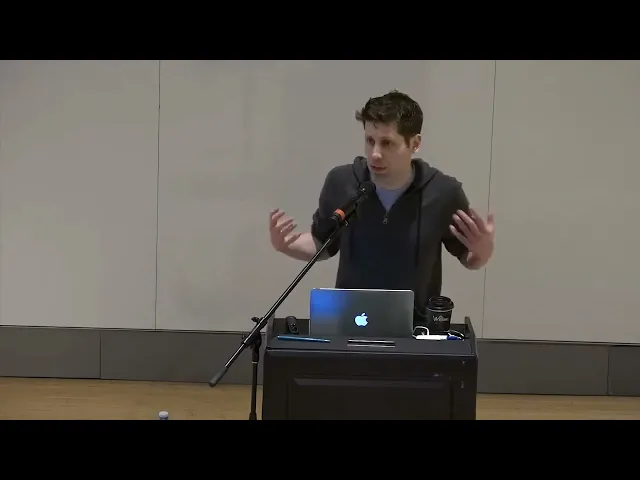
Sam Altman puts it differently: wait to have a good idea before you start a startup. If you start without one and just cast around, you’ll be under pressure to make something up. And made-up ideas don’t survive contact with reality.
So how do you find the right idea at the right time? Here’s what the data and the best founders actually tell us.
Presented by Scriptbee
If you’re building a startup in 2026, here’s a question worth asking: when someone asks ChatGPT or Perplexity for a solution in your category, does your brand show up?
Most founders have no idea. Scriptbee gives you the answer. Track your brand’s visibility across AI search engines, see which queries trigger mentions of your product, and optimise your content to win more AI-generated recommendations. One B2B SaaS company grew their AI visibility by 40% in 60 days.
WHAT MATTERS TODAY
1. The clone trap kills more startups than bad execution
Here’s the pattern. Something works — a new app, a business model, a category — and thousands of people rush to copy it. It happened with social networks after Facebook. It happened with photo-sharing apps after Instagram. And it’s happening right now with AI wrappers.
Altman shares a revealing stat from when he joined the board of Helion, a nuclear fusion company: that same year, roughly 10,000 photo-related startups launched alongside it. One nuclear fusion company. Ten thousand photo apps.
The odds were obvious, but nobody was paying attention. Meanwhile, 42% of startups fail because they build products nobody actually wants — the single biggest killer. Not bad code. Not weak marketing. Building something the market never asked for.
The takeaway for operators: if you can name ten companies doing the same thing you’re doing, that’s not validation — that’s a warning sign.
2. The best ideas come from personal pain, not market research decks
Strip away the mythology and most transformational companies started with someone solving their own problem. Altman is emphatic about this — a very high percentage of the best startups trace back to founders scratching their own itch.
Airbnb’s founders needed to pay rent. They noticed hotels in San Francisco were sold out during a design conference, so they put air mattresses in their living room. That wasn’t a market analysis. That was survival. Stripe’s founders were building websites and kept running into the same nightmare: payments were absurdly hard to integrate. They didn’t conduct a survey. They felt the pain every single day.
This matters because personal experience gives you an unfair advantage. You understand the nuance. You know what “good enough” actually looks like to the end user. You don’t need a focus group to tell you the problem is real — you’ve lived it.
The data backs this up. First-time founders have an 18% success rate. Those who’ve previously failed do slightly better at 20%. But founders with a successful exit? They hit 30%. Why? Because they’ve developed the pattern recognition to spot real problems versus imagined ones.
3. Timing is the invisible advantage nobody talks about enough
Here’s where Altman’s thinking and Gross’s data converge beautifully. Both argue that great companies cluster around major technological waves — not because founders coordinate, but because the wave creates new problems that need solving.
The internet wave in the mid-to-late 90s produced Amazon, Google, and Yahoo. The mobile wave after the iPhone in 2007-2008 produced Uber, Airbnb, Instagram, and WhatsApp. Each cluster appeared in a tight window, right after a major platform shift.
Altman’s insight is that you don’t need to create the wave — that takes too many resources for a startup. What you can do is notice it early, while others still think it’s a toy, and build on top of it.
Subscribe to the Newsletter
Join thousands of ambitious creators receiving exclusive strategies, tools, and inspiration to grow and monetize their brands.